If the main idea behind Trump’s policy is America first, the next question must be: Who comes second, if there is anyone at all? By putting American interests above everything else, this move slowly weakens the relationship between the US and the EU. Their relationship for decades was one of the key pillars of the Western political order, so the real question must be how strong that transatlantic bond really is today.
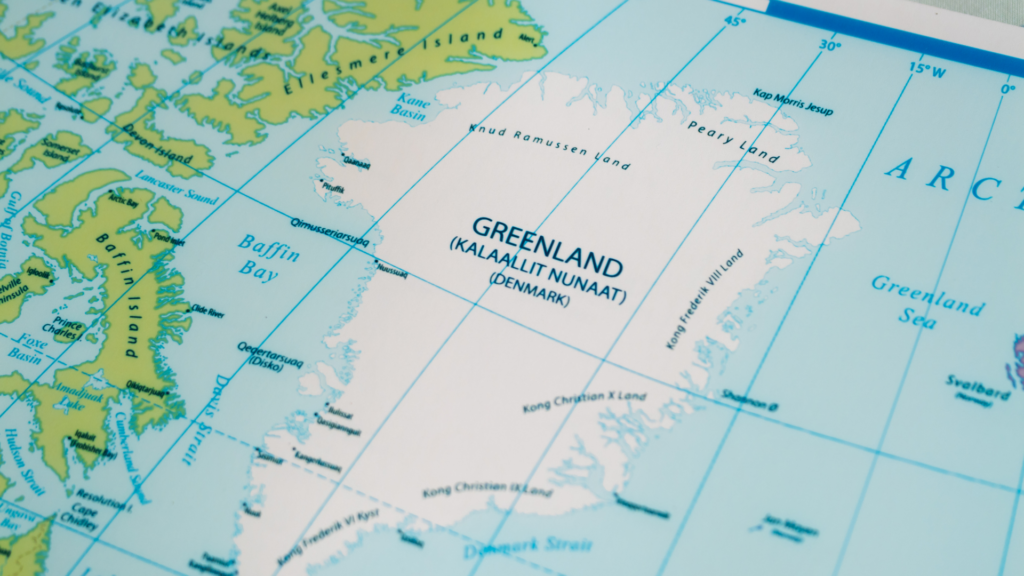
The case of Greenland shook the European political scene. The idea of a place that is so freezing cold most of the year being the hottest topic right now is kind of absurd. This case pushed Europe to close ranks and to think more seriously about its own unity and strategic independence. In some way, Trump pushed the EU to reconsider its alliances: first within its own borders and then beyond the traditional Western framework. Strengthening relations with India and South America can be seen as part of that search for new and alternative partnerships.
Is it a good strategy to make a one man’s idea a whole country’s political approach? As a whole new ideology, there is Trumpism, which has reshaped US policy in ways that have weakened America’s credibility and questioned its long-standing leadership role on the global stage. When so much foreign policy power is concentrated in the hands of one political figure, it can create inconsistency, unpredictability, and, over time, weaken the country’s overall position.
As the EU searches for new partners across the globe, where does that leave the Western Balkans? Is the region still part of Europe’s strategic future, or is it quietly slipping to the margins of a changing global order? This article argues that the Western Balkans is not a US strategic priority, but a region left to European facilitation and short-term stabilisation, which prolongs political stagnation and opens up space for competing external influences.
Greenland as Confirmation of Transatlantic Divergence
Donald Trump’s foreign policy is now seen more as something that weakens the US international position and not the typical projection of American power. His one-sided approach not only weakens the transatlantic alliance but also leads to the gradual loss of traditional partners. For the first time in his term, his foreign policy faces not only European criticism but also from his closest partners from the American political elite, raising high doubts about its long-term sustainability.
This issue of Greenland is often presented as something new and shocking, but in reality, it’s really not. As early as 2019, Donald Trump openly raised the question of purchasing Greenland, and he continues to repeat similar statements today. Behind these remarks lies not merely political provocation, but a clearly defined set of strategic interests of the United States.
But why is the biggest island in the world so important? Greenland’s importance lies in its Arctic position. This region is gaining significance due to climate change, new maritime routes and growing militarisation. The Arctic has become a new space for strategic competition among major powers, especially Russia and China, in which case China presents itself as a near-Arctic state. Also, Greenland possesses significant natural resources, including rare-earth elements and critical minerals essential for the green transition, as well as potential reserves of oil and gas, which further enhance its strategic value for the American economy and energy security.
Trump’s demand for taking control of Greenland was quickly dismissed by both Danish and Greenlandic officials. This issue resulted in serious diplomatic tensions, including threats of imposing additional trade tariffs on European allies. Deeply controversial were Trump’s statements regarding the possibility of military annexation of Greenland. Although the US is undeniably the most powerful military force in the world, the political cost of such a move would be extremely high. The forcible takeover of the territory of a sovereign state without Denmark’s consent would constitute a gross violation of international law and lead to a serious deterioration of relations with the EU, thereby placing the transatlantic alliance in shambles.
This shows a wider trend of pressure on the EU as it is seen in trade disputes, tariff threats and political tensions. Because of all this pressure, the EU is working overtime to make alternative strategic and economic partners beyond the transatlantic framework. One of the most significant examples is the free trade agreement between the European Union and India, which the President of the European Commission described as the “Mother of all agreements.” The agreement, covering a market of nearly two billion people, shows that the EU is in the process of looking for new partners due to strained relations with the US.
A similar political message can be seen in the free trade agreement between the EU and Mercosur, signed in January 2026. The deal includes Brazil, Argentina, Paraguay, and Uruguay, and could create one of the largest free trade areas in the world, with more than 700 million consumers. We can see that regarding this agreement, the EU has no time to wait. The free trade deal was accepted under a regime of provisional application at the end of February 2026. This means that the core trade and economic provisions can be implemented and produce legal effects before the completion of the full ratification process. In other words, it is a form of pseudo-provisional application, which allows the agreement to operate in practice before receiving final legal approval, including confirmation by the EU Court of Justice.
Such an approach reflects the EU’s urgent need for new trade partners and markets. On the other hand, it is also controversial and is yet to receive both the approval of the EU Court of Justice and the consent of all member states. The EU Commission justified this step by pointing out that Argentina and Uruguay have already ratified the agreement in their national parliaments. In this way, the EU signalled once again that it has no time to wait.
After J.D. Vance’s attack on European democracy at the 2025 Munich Security Conference, which left a lot of European officials offended, Marco Rubio’s speech left a heartwarming and also a warning feeling. Rubio called the US “a child of Europe”, claiming that the US and EU belong together, but only if Europe wakes up. Rubio said the EU needs to start to defend itself and not to wait for America to help it. “We live in a new era in geopolitics”, said Rubio. Acknowledging, in a way, past tensions between the USA and the EU. But not once did Rubio mention Greenland, making this crisis silently go away. As in Rubio’s words USA and Europe make up the Western hemisphere, and they need each other to coexist. There is, nevertheless, a partial shift in the foreign policy of the United States toward Europe, though not a complete one. The US is abandoning territorial ambitions while simultaneously signalling to the EU that it must become more self-reliant and reduce its reliance on American support.
The case of the Western Balkans
Instead of asking who comes second in the foreign policy of Donald Trump, it is more useful to ask where the Western Balkans stands in all of this. It’s not a secret that the region has largely been pushed off the American agenda and left to European management, as proved by White House that the Balkans currently do not represent a priority security or political risk.
It seems that the administration of Donald Trump sees the Western Balkans mainly as a region where it can work pragmatically with certain leaders, which is why the situation may look stable on the surface. However, the focus of Trump’s policy is not on long-term strategy in the region, but on changes inside the US system, such as pushing to appoint politically loyal ambassadors. In his second term, President Trump has heavily prioritised personal loyalty when appointing ambassadors, often selecting political allies over career diplomats to advance his “America First” agenda. In this context, the fact that there are currently no appointed ambassadors of the United States in Serbia, North Macedonia, Bosnia and Herzegovina, Montenegro, and Albania is particularly concerning.
The ambassadors in North Macedonia and Montenegro were withdrawn in December 2025, along with diplomats from 28 other countries, while the nomination of Mark Brnovich for Serbia was withdrawn, after which he passed away. These decisions send a clear message of the marginalisation of the region in American foreign policy and raise the question of who today, and in what manner, actually shapes policy toward the Western Balkans.
Although one of the long-term aims of the United States is to limit the influence of Russia and China in the Western Balkans, the region today appears less as a strategic priority and more as a space of managed instability. Relations between Belgrade and Pristina remain fragile, political processes across the region are slow and uncertain, and external actors seem primarily focused on preventing crises rather than offering a clear long-term vision for development and integration.
Western Balkans find themselves caught between two unfinished policies: American withdrawal and European indecisiveness. Both the European Union and the United States are confronted with the need to redefine their approach to the region, as the absence of a clear strategy does not produce stability, but rather prolongs a state of political stagnation that, in the long run, opens space for alternative, often competing influences.
Conclusion
Trump’s foreign policy has clearly pushed the EU to look beyond its traditional transatlantic ties and search for new partners in other parts of the world. It seems like the White House forgot about its most reliable partner – the EU.
Moreover, WB also remained under the radar of US foreign policy, for now. Everyone is left to take care of themselves and their own policies in this volatile geopolitical context. Europe currently lacks enough mechanisms to limit the interests and pressures of outside actors, but after repeated calls to strengthen itself, the EU may begin to move in that direction.
__________
This publication was produced with the support of the Open Society Institute – Sofia through the “Think Tanks for the Future of EU Enlargement Program” (TFEP). The contents of this publication are the sole responsibility of the author and do not necessarily reflect the views of the Open Society Institute – Sofia or the European Policy Centre (CEP) and Sbunker as partner organisations in charge of the implementation of the project Supporting the EU enlargement through the normalisation process between Serbia and Kosovo: Civil society as a driver of progress.